
It Ends VFX Review: I Couldn’t See the Effects, and That’s Why They Worked
August 19, 2026 - Entertainment
It Ends VFX Review: I Couldn’t See the Effects, and That’s Why They Worked
The endless drive looked real. The Jeep was sitting on a soundstage. I never noticed.
I need to admit something: I watched It Ends and had no idea how much virtual-production work I was actually seeing. In my first review, I looked at the movie as a mystery selection from Regal’s Monday Mystery Movie: Horror Edition. I focused on the premise, the humor, the ending, and whether Regal’s surprise choice delivered the horror experience it advertised.
Then I put my VFX Producer hat back on. The only effect I thought I could identify was an injury that looked like practical special-effects makeup. I have not found a makeup breakdown confirming exactly how it was created, so that remains my read of the shot. Beyond that, I honestly couldn’t identify much obvious VFX while watching the movie. That left me with a question: Did It Ends use very little VFX, or was the work integrated so well that I simply accepted it?
The answer is much more interesting than I expected.
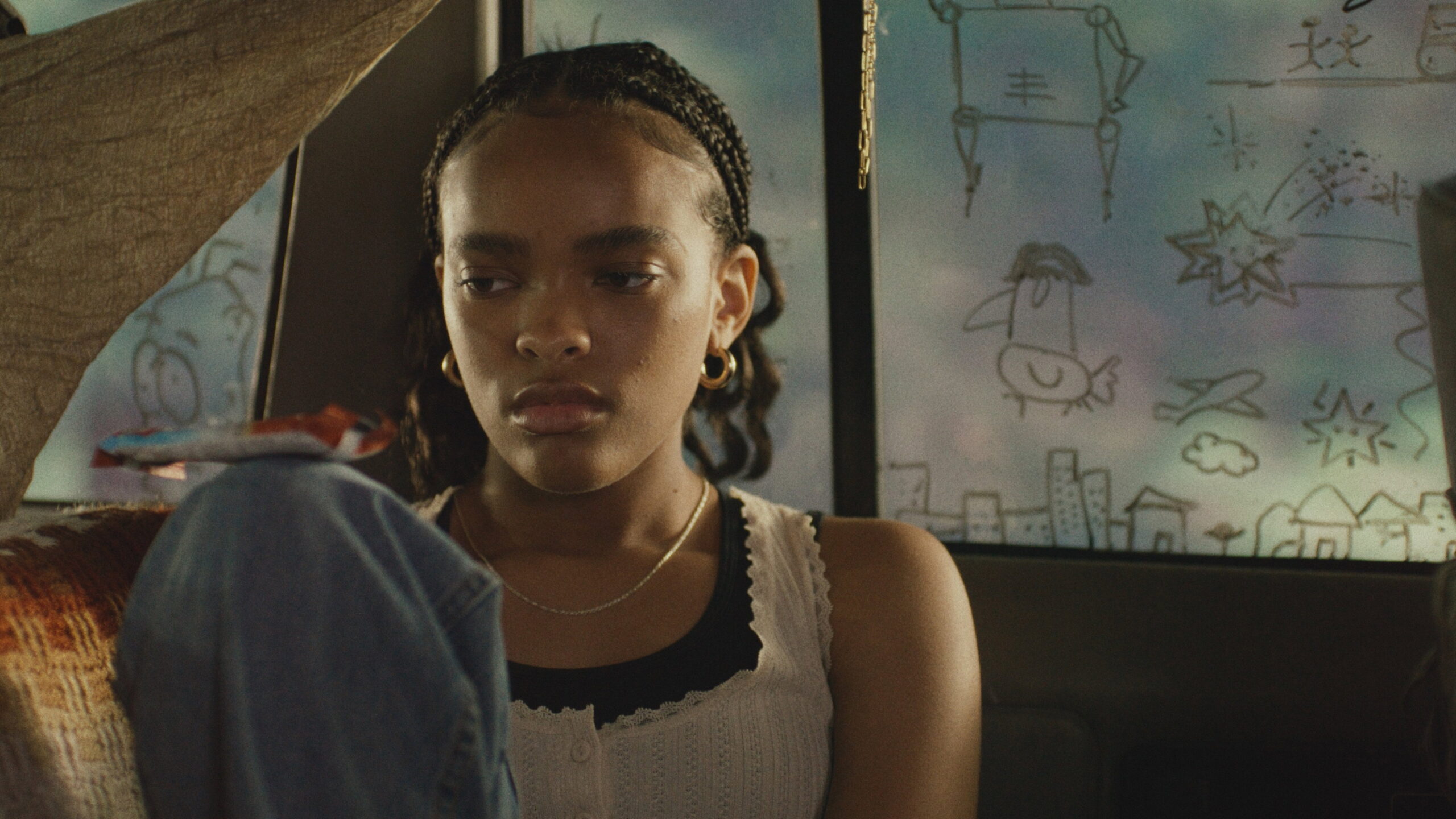
As the drive continues, the Jeep stops feeling like a vehicle and starts feeling like its own little world.
Most VFX Is Not Trying to Impress You
When people hear “visual effects,” they usually imagine creatures, explosions, impossible environments, and giant digital spectacles. That was not most of the work I encountered when I worked in VFX. A lot of it was removing things that were never supposed to be in the shot: a bag that did not belong, a coffee cup, a script left on a bed, or random cars driving through the background. It was detailed, repetitive work designed to erase distractions and protect the reality of the scene. If the work was done well, nobody noticed it. That is the strange reality of invisible VFX. The audience may never know how much labor went into a shot because the entire goal was to leave no visible evidence behind.
The Endless Road Was Built on a Stage
After watching It Ends, I learned that the production used Florida State University’s Torchlight Virtual Production Stage for its vehicle scenes. An LED volume displayed the driving environments around the actors, allowing the filmmakers to create realistic road footage, lighting, and reflections while the vehicle remained on a soundstage. Florida State University’s College of Motion Picture Arts confirms that the LED stage was used to create the movie’s vehicle sequences.
The setup required a very practical solution to a digital problem: the Jeep would not fit through the hallway leading to the stage. Producer Carrie Carusone said the team cut the vehicle in half to get it inside, with only half an inch to spare. That is filmmaking. Sometimes the secret behind an endless supernatural road is cutting a real Jeep apart so it can fit through a very normal hallway.
Writer-director Alexander Ullom explained that the woods sequences were filmed outside, while the virtual-production facility handled the car photography. The screens gave the actors realistic environmental reflections and allowed the crew to maintain consistent crack-of-dawn lighting instead of racing the real sunrise. Ullom felt the results looked more convincing than a traditional green-screen setup. His detailed production interview with Filmmaker Magazine also discusses the background plates, stabilization, lighting changes, and shot planning required inside the volume.
And I did not catch it. I believed the car was traveling down that road.
Why the Illusion Worked
The virtual-production work was not there to announce itself. It was there to hold the movie together. The entire premise depends on the characters continuing to drive through an environment that feels endless. If the backgrounds had looked disconnected, if the lighting had not matched, or if the reflections had felt artificial, the illusion would have collapsed. Instead, the digital environment stayed in service to the characters. The road remained present without becoming a visual-effects showcase. The technology created the space, but the performances remained the focus.

he Jeep interiors are where the film’s virtual-production work hides in plain sight.
That restraint is probably why I was questioning…
…whether the movie had much VFX at all.

The real wooded locations keep the characters and their impossible situation grounded in something tangible.
There was also post-production work that was even harder to identify. In an interview with Adobe, Ullom confirmed that he edited the film in Premiere Pro and used After Effects to create some artificial camera shake. Adobe’s conversation with Ullom provides another small example of digital work being used to support the feeling of a shot rather than become its subject.
Practical Effects, Virtual Production, and VFX
These terms often get blended together, but they are not interchangeable. The injury I noticed looked like practical special-effects makeup, although I have not found confirmation from the production about exactly how it was created. The roadside and wooded locations were filmed outside. The moving environments around the vehicle were created through virtual production using an LED stage. Camera movement was also enhanced digitally in post. It Ends used different tools for different problems. The filmmakers did not appear interested in using technology simply because they could. They used it where it helped create an impossible road on an independent production.

The exterior forest scenes were shot on location, helping the virtual road feel like part of the same world.
My VFX Producer Verdict
I cannot fairly judge every effect in the film without a complete shot breakdown. I do not know how much cleanup, paint work, compositing, or other invisible correction may have happened beyond what the filmmakers have publicly discussed. But I can judge the result I experienced. I watched It Ends without noticing that its interior driving scenes were created on a virtual-production stage. I noticed the injury effect because I was meant to see the injury. I did not notice the digital machinery supporting the endless road because I was never supposed to see it. That is successful visual effects work. My opinion of Regal’s “Horror Edition” label has not changed. Wearing my movie-enthusiast hat, I still have questions about whether the film delivered the genre experience Regal advertised. Wearing my VFX Producer hat, however, I have a very different conclusion. Regal may not have understood the horror assignment. The virtual-production team absolutely understood theirs.
Until the next frame…
Jessika Darkstar
Regal's Monday Mystery Movie: Horror Edition Got It Ends Wrong
Regal’s Monday Mystery Movie: Horror Edition Got “It Ends” Wrong I liked the premise, laughed more than once, and enjoyed the ending. But horror? Regal, you failed to scare me. It Ends, is not what I would call “horror.” I walked into Regal’s Monday Mystery Movie: Horror Edition expecting to be [...]| Play | Cover | Release Label |
Track Title Track Authors |
|---|